Yoga Mat Material Comparison: TPE vs PU, Rubber, Cork & PVC
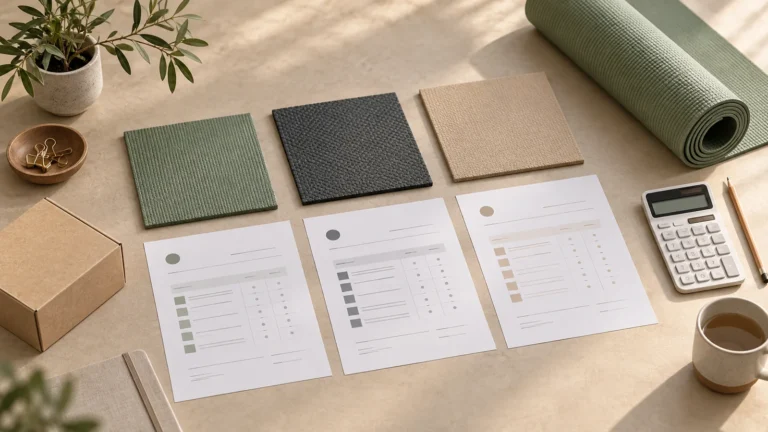
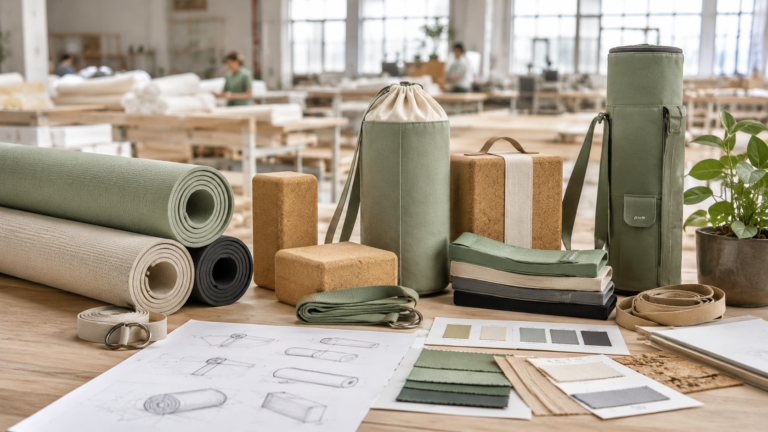
This yoga mat material comparison helps private label buyers choose between TPE, PU, natural rubber, cork and PVC. Material choice is one of the highest-impact decisions in a private label project. The material affects grip, weight, cushioning, odor, cleaning, printing, packaging, freight cost and retail positioning. It also affects which claims a brand can responsibly make.
There is no universal “best” yoga mat material. A lightweight TPE mat, a dense natural rubber mat and a cork-topped mat solve different customer problems. This guide compares five common options—TPE, PU and rubber, natural rubber, cork and PVC—so buyers can build a product brief around the intended user rather than a material name alone.
Quick Comparison: Which Yoga Mat Material Fits Which Product?
| Material or construction | Typical strengths | Points to verify | Often suited to |
|---|---|---|---|
| TPE | Lower weight, cushioning, broad color and texture options | Density, compression recovery, tear resistance, odor and surface wear | Entry-to-mid-range retail, home practice and lightweight ranges |
| PU surface + rubber base | Strong dry and damp grip potential, premium hand feel, detailed visual finish | Surface staining, bonding, scratch resistance, print durability and care instructions | Premium and hot-yoga-oriented collections |
| Natural rubber | Dense support, stability and strong traction potential | Weight, initial odor, latex-related labeling, color variation and storage | Performance-focused and premium ranges |
| Cork surface + base layer | Natural visual identity and grip that can change with moisture | Cork quality, bonding, cracking, edge finish and the actual base material | Natural-looking collections, studios and differentiated retail |
| PVC | Durability potential, easy-care surfaces and wide texture options | Formulation, weight, odor, plasticizer requirements and market-specific compliance | Studio, high-use and value-focused ranges |
This table is a starting point, not a performance guarantee. Formulation, density, thickness, texture and lamination can make two mats with the same material label behave very differently.
1. TPE Yoga Mats: Lightweight and Flexible for Broad Retail Programs
TPE mats are commonly considered when a buyer wants a lighter product, visible cushioning and flexible color or texture development. They can work well for home users, online retail and programs where shipping weight matters.
Do not approve a TPE mat based only on thickness. Ask for finished weight, density or hardness information, compression recovery and the exact layer construction. Check whether the mat permanently dents after storage, stretches during practice or tears around the edges. A good sample review should also include odor, color consistency, surface grip and resistance to repeated rolling.
For available formats, review AICO Yoga’s TPE yoga mat range and specify the target size, thickness, color, texture, logo method and packaging in one written brief.
2. PU and Rubber Yoga Mats: A Premium Grip-Oriented Construction
“PU yoga mat” usually describes a polyurethane practice surface bonded to a supporting base, often rubber. This construction is popular when the product concept emphasizes a premium touch and grip during dry or sweaty sessions.
The surface layer needs careful approval. Test the exact color for staining, visible marks, cleaning response and long-term appearance. Confirm the bonding method and inspect edges for lifting or separation. Because absorbent or open-surface finishes can react differently to oils, lotions and cleaning products, the care instructions should be developed from testing rather than copied from another mat.
Artwork can look sharp on a PU surface, but the buyer should approve print color, adhesion, abrasion resistance and logo position on a complete sample. See the PU yoga mat options when preparing a premium private label brief.
3. Natural Rubber Yoga Mats: Dense Support and Stable Feel
Natural rubber is often selected for a heavier, more grounded mat with strong traction potential. The added mass can support a stable practice experience, but it also changes freight cost, shelf handling and customer expectations.
Buyers should define rubber content and construction rather than relying on the word “natural.” Review initial odor after unpacking, weight tolerance, surface bloom or color variation, edge quality and storage behavior. Natural rubber can also be relevant to latex-sensitive users, so product descriptions and warnings must be reviewed for the destination market.
Compare proposed samples at the same thickness and conditioning state. A thick but low-density product should not be treated as equivalent to a thinner, denser mat. AICO Yoga’s natural rubber yoga mat range provides a starting point for specifying dimensions, surface texture, branding and packaging.
4. Cork Yoga Mats: Natural Appearance with Layered Construction
Cork offers a distinctive visual identity and is frequently chosen for collections positioned around natural materials. However, “cork mat” normally describes the practice surface, not the full mat. The base may be rubber, TPE or another material, and that base strongly affects weight, cushioning, stability and cost.
Specify the cork layer, base material, bonding method and finished thickness separately. Inspect the sample for cracking, flaking, uneven tone, edge separation and curling. Evaluate grip in both dry and damp conditions because the surface response can change with moisture.
Printing should be approved on the actual cork surface; natural texture and color variation can influence fine details. Review AICO Yoga’s cork yoga mat options and document both the top and base layers in the purchase specification.
5. PVC Yoga Mats: Durable Options for High-Use Programs
PVC can be considered for products that prioritize durability, easy cleaning, established texture options and competitive pricing. Dense PVC constructions may suit studios or other frequent-use environments, while lighter foam constructions serve different retail segments.
The formulation matters. Buyers should request the relevant material and restricted-substance documentation for the destination market instead of making assumptions from the material name. Check weight, odor, dimensional stability, surface wear, compression marks and cleaning resistance.
If environmental positioning is central to the brand, the marketing team should review every claim against the exact formulation and available evidence. The PVC yoga mat range can be used to define the intended construction and customization details.
How Buyers Should Choose Between TPE, PU, Rubber, Cork and PVC
Start with the user’s practice
A hot-yoga customer may prioritize damp grip and cleaning. A beginner may value cushioning and low weight. A studio may prioritize durability and fast maintenance. Define the practice environment before selecting the material.
Compare complete constructions at the same specification
Material comparisons are misleading when thickness, density, size and texture are different. Ask suppliers to quote comparable dimensions and clearly identify every layer. Record finished weight because it affects both user experience and logistics.
Test claims before using them in marketing
Words such as eco-friendly, non-toxic, anti-slip, biodegradable and recyclable require precise definitions and supporting evidence. Requirements vary by destination market and product construction. Ask what documentation applies to the exact material, color, ink, adhesive and finished product.
Include packaging and freight in the decision
A heavy premium mat may deliver a strong product experience but cost more to ship and handle. A light mat may lower freight cost but need additional protection against compression. Request packed dimensions, unit weight, carton quantity and carton measurements before comparing final landed cost.
Private Label Yoga Mat Sample Checklist
- Finished length, width, thickness and weight.
- Layer construction, material description and density or hardness reference.
- Dry and damp grip for the intended practice.
- Cushioning, compression recovery and dimensional stability.
- Odor after unpacking and after an agreed airing period.
- Surface wear, edge durability, bonding and repeated rolling.
- Color standard, logo method, print adhesion and abrasion.
- Cleaning instructions and reaction to approved cleaning products.
- Labels, warnings and destination-market documentation.
- Retail packaging, packed size, carton data and retained approval sample.
Frequently Asked Questions
Is TPE or natural rubber better for a private label yoga mat?
TPE is often considered when lower weight and cushioning are priorities. Natural rubber is often considered when a denser, more stable feel is preferred. The better choice depends on the target user, price position, freight plan and tested construction.
Is a cork yoga mat made entirely from cork?
Usually no. Cork commonly forms the top surface and is bonded to a supporting base. Buyers should specify both layers because the base controls much of the mat’s cushioning, weight and stability.
Which yoga mat material is best for custom printing?
Several materials can support logos or full-surface designs, but the suitable method depends on surface texture, ink system, expected abrasion and order requirements. Approve artwork on a complete sample and test the print before production.
Build the Material Decision into Your RFQ
A useful RFQ should state the target customer, practice type, price position, dimensions, weight, performance priorities, preferred materials, artwork, packaging and destination market. Ask for clearly separated alternatives when more than one construction is being compared.
Contact AICO Yoga for a private label yoga mat quotation. Share your target quantity, market and product brief so the material, sample and packaging options can be reviewed around the same commercial goal.