Custom Meditation Cushions: 8 Specifications for Private Label Buyers
Custom meditation cushions may look simple, but their finished comfort and appearance depend on several connected decisions. Shape, dimensions, filling, cover fabric, liner construction and fill quantity all influence posture support, firmness, weight, care and shipping volume. A request for “a meditation cushion with our logo” is therefore not detailed enough for accurate sampling or quotation.
Private label buyers can reduce sample revisions by defining the product as a complete system. The following eight specifications create a practical brief for yoga brands, meditation retailers, studios, wellness companies and distributors. Available materials and constructions vary, so confirm every detail with the supplier and approve a complete physical sample before production.
1. Select the Cushion Shape and Intended Sitting Position
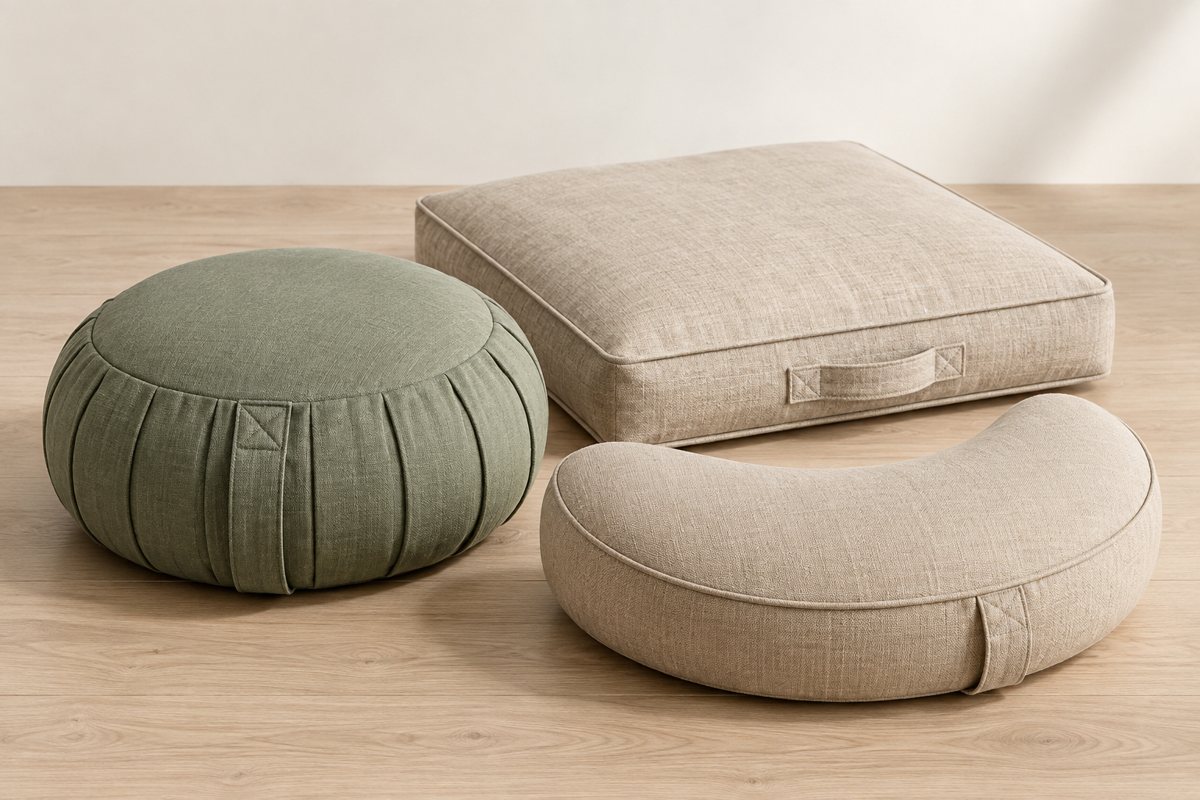
Begin with the product format and intended user experience. Common options include a round zafu, pleated round cushion, crescent cushion, rectangular cushion and a larger square floor cushion. A round design provides a compact raised seat, while a crescent profile can create more space around the legs. A square cushion may be used alone or beneath a smaller seat cushion.
State the intended sitting position, support level and use environment. A cushion for a studio class may prioritize durability and easy handling, while a home meditation collection may emphasize coordinated colors, removable covers and retail presentation. Do not assume that two cushions with similar photographs have the same internal construction.
Identify the closest reference model in the inquiry. Buyers can review the natural rubber meditation cushion and linen meditation cushion as starting points, then record every required change in a written specification.
2. Record Finished Dimensions and Profile
Specify the finished diameter and height for a round cushion, the width, depth and height for a rectangular model, or the full width, center depth and opening dimensions for a crescent shape. Explain how the cushion should be positioned and shaped before measurement.
Soft filled products change with handling. Fabric tension, fill type, fill quantity and settling can affect the apparent height and edge profile. Ask the supplier to propose practical tolerances and agree on whether measurements are taken immediately after filling or after a defined conditioning period.
Provide a labeled drawing showing the main dimensions, panel seams, pleats, zipper, handle, piping and logo location. Keep photographs of the approved sample from the top, side and bottom. These references make it easier to distinguish acceptable soft variation from a meaningful dimensional or construction change.
3. Define the Filling Material and Fill Quantity
The filling has a direct effect on support, weight, recovery, sound, care and shipping. Depending on the design, suppliers may propose fiber, cotton-based fill, foam, molded components, natural loose fill or a combination. Ask for a clear material description and construction instead of accepting a general term such as “eco filling” or “premium foam.”
Record the target fill weight or internal component specification for each cushion size. Loose filling should be distributed evenly and contained securely. Structured foam or molded inserts should have a defined shape, thickness and orientation. If the product is refillable, confirm how users can add or remove material without damaging the cover or liner.
If the brand plans to make material, recycled-content, natural or certification claims, request documentation for the exact filling used in the order. Approve claim wording only after the supporting information has been reviewed for the destination market.
4. Approve Firmness, Support and Recovery
Terms such as soft, medium and firm help during development but are not complete production specifications. Two cushions can use the same fill material and still feel different because of fill quantity, chamber construction, cover tension and finished dimensions.
Approve firmness through a complete physical sample and keep that sample as the primary reference. Review how the cushion supports the intended sitting position, whether the top remains level and how the edges behave under load. Check recovery after repeated compression and after the proposed packaging method.
If a measurable compression test is required, define the sample conditioning, loading area, load, duration, measurement points and acceptable result. Use the same method for development, production inspection and repeat orders. A numerical target without a consistent test setup can create misleading comparisons.
5. Choose the Outer Cover and Inner Liner
The outer cover determines appearance, touch, color, abrasion behavior and care instructions. Options may include cotton canvas, linen-style woven fabric, polyester blends or other textiles suitable for the product concept. Ask for fiber composition, construction, fabric weight reference, finish and available color method.
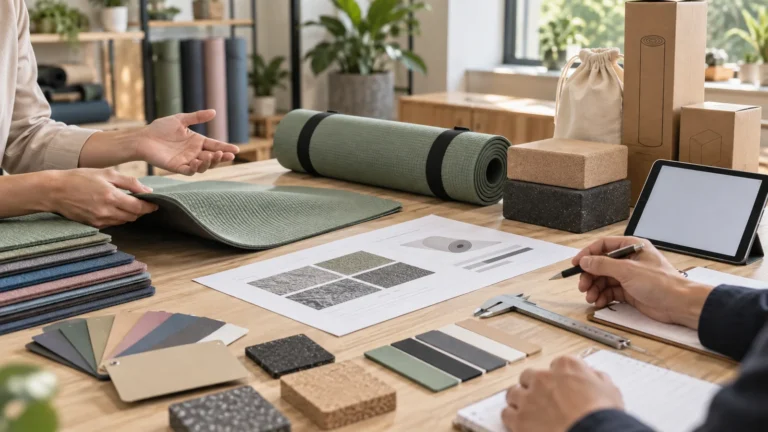
Review physical fabric and color swatches. Woven texture and fiber content can change how a color appears under different lighting. Define whether the main fabric, piping, zipper tape, thread, label and handle should match or use an intentional contrast.
A removable cover normally requires a separate inner liner that contains the filling. Specify the liner fabric, seam construction, closure and refill access. The filled liner should fit the outer cover without excessive bunching, empty corners or strain at the zipper. Align washing and care instructions with the complete cover, liner and filling system.
6. Specify Pleats, Panels, Zippers, Handles and Sewing
Construction details shape the product and influence durability. For a pleated zafu, define the number and direction of pleats, top and bottom panel dimensions and how the pleats should align. For a crescent cushion, record the inner curve, outer curve and panel symmetry. For a square cushion, define edge profile, piping and corner shape.
Specify zipper placement, opening length, tape color, slider and puller. The opening should allow the cover or liner to be removed without forcing the filled unit. Concealed zippers should remain accessible while reducing direct contact during use.
Define handle width, length, material, placement and reinforcement. Test the handle on the fully filled cushion because the finished weight affects the attachment. Inspect stitch consistency, seam security, balanced panels, loose threads, puckering, zipper operation and internal seam finishing.
7. Plan Logo Placement, Labels and Collection Consistency
Branding options may include embroidery, screen printing, heat transfer, woven labels, patches or another method suited to the selected fabric. Supply vector artwork and define the finished size, color, orientation and distance from seams, pleats, piping, zippers and handles.
Approve branding on the completed filled cushion. A flat fabric strike-off cannot show how a logo will appear across a curved, pleated or tensioned surface. Check legibility from the intended display angle and confirm that embroidery backing, label edges or patch thickness do not create an undesirable feel.
List all required brand, fiber, care, country-of-origin and market labels. If the cushion belongs to a coordinated yoga collection, create a color and material schedule covering the mat, bolster, block, strap, blanket and packaging. The OEM and ODM solutions page outlines the broader private label development process.
8. Agree on Packaging and Production Quality Checks
Meditation cushions can occupy significant carton volume, so packaging should be reviewed before the final quotation. Define whether the cushion will ship at full shape, compressed where suitable, packed as separate cover and liner components, or prepared in another approved format. Test appearance and recovery after the proposed packing period.
List each packaging component, including protective bag, insert, hangtag, barcode label, retail sleeve and carton markings. After approving the packed sample, request unit dimensions, gross weight, units per carton and carton measurements for freight planning.
Build an inspection checklist covering shape, finished dimensions, weight, firmness reference, fabric, color, fill distribution, liner, zipper, handle, piping, pleats, seams, logo, labels and package contents. Retain the approved cushion and component references for repeat orders. The manufacturing overview can help buyers prepare additional production and inspection questions.
Custom Meditation Cushion Inquiry Checklist
- Cushion shape, intended use and reference model.
- Finished dimensions, profile and agreed tolerances.
- Filling material, fill quantity, finished weight and firmness reference.
- Outer cover composition, fabric weight, texture and color.
- Inner liner, closure and refill requirements.
- Pleats, panels, zipper, handle, piping, seams and reinforcement.
- Logo artwork, labels and care information.
- Packaging method, carton details and quality checks.
Include the target quantity, destination and preferred delivery timing. Mark undecided details as separate alternatives so they can be quoted clearly. When comparing offers, confirm that each price covers the same dimensions, filling, fabric, construction, branding and packaging scope.
Frequently Asked Questions
How should meditation cushion firmness be specified?
Approve a complete physical sample and keep it as the main reference. If a measurable compression check is needed, define the exact loading method, duration, measurement points and acceptable result.
Should a meditation cushion have a removable cover?
That depends on the product concept and care plan. A removable cover normally requires a separate inner liner, a suitable zipper opening and care instructions that match both the cover and filling system.
Can meditation cushions be compressed for shipping?
Only after the exact construction has been tested. Confirm how the cover, filling, profile and firmness recover after the proposed compression level and storage period.
What should buyers keep for repeat orders?
Retain the approved filled cushion, dimensional drawing, fabric and color swatches, filling specification, liner and hardware references, artwork, labels, packaging files and inspection checklist.
Prepare a Complete Private Label Cushion Brief
A detailed specification makes custom meditation cushions easier to quote, sample, inspect and reorder. Define the shape, dimensions and filling first, then approve the complete cover, construction, branding and packaging combination.
Contact AICO Yoga about your custom meditation cushion project. Share the preferred shape, dimensions, quantity, filling, fabric, logo and packaging requirements so the project can be reviewed around one clear brief.