Custom Yoga Blocks: 7 Specifications for Private Label Buyers
Custom yoga blocks can look similar in a catalog while differing in shape, surface feel, weight and packaging. For a private label brand, these differences affect how the product fits the collection and what customers receive. A clear specification helps suppliers quote the same product and gives buyers a reference for approving samples.
Before ordering wholesale yoga blocks, define the following seven items. This guide focuses on purchasing and product development rather than exercise instruction. The goal is to turn broad requests such as “firm block with our logo” into details that can be discussed, sampled and checked.
Start With the Intended Collection
Decide whether the block will be sold individually, as a pair or within a coordinated yoga set. Identify the intended sales channel and the visual direction of the range. A studio replenishment order and a gift-ready retail kit may need different packaging even when the block itself is identical.
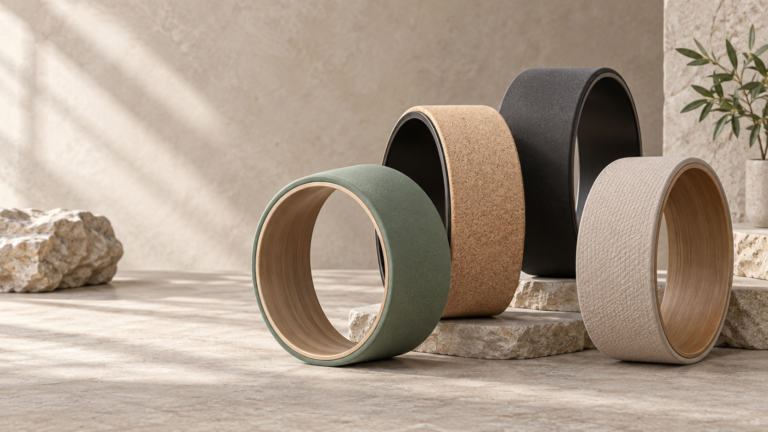
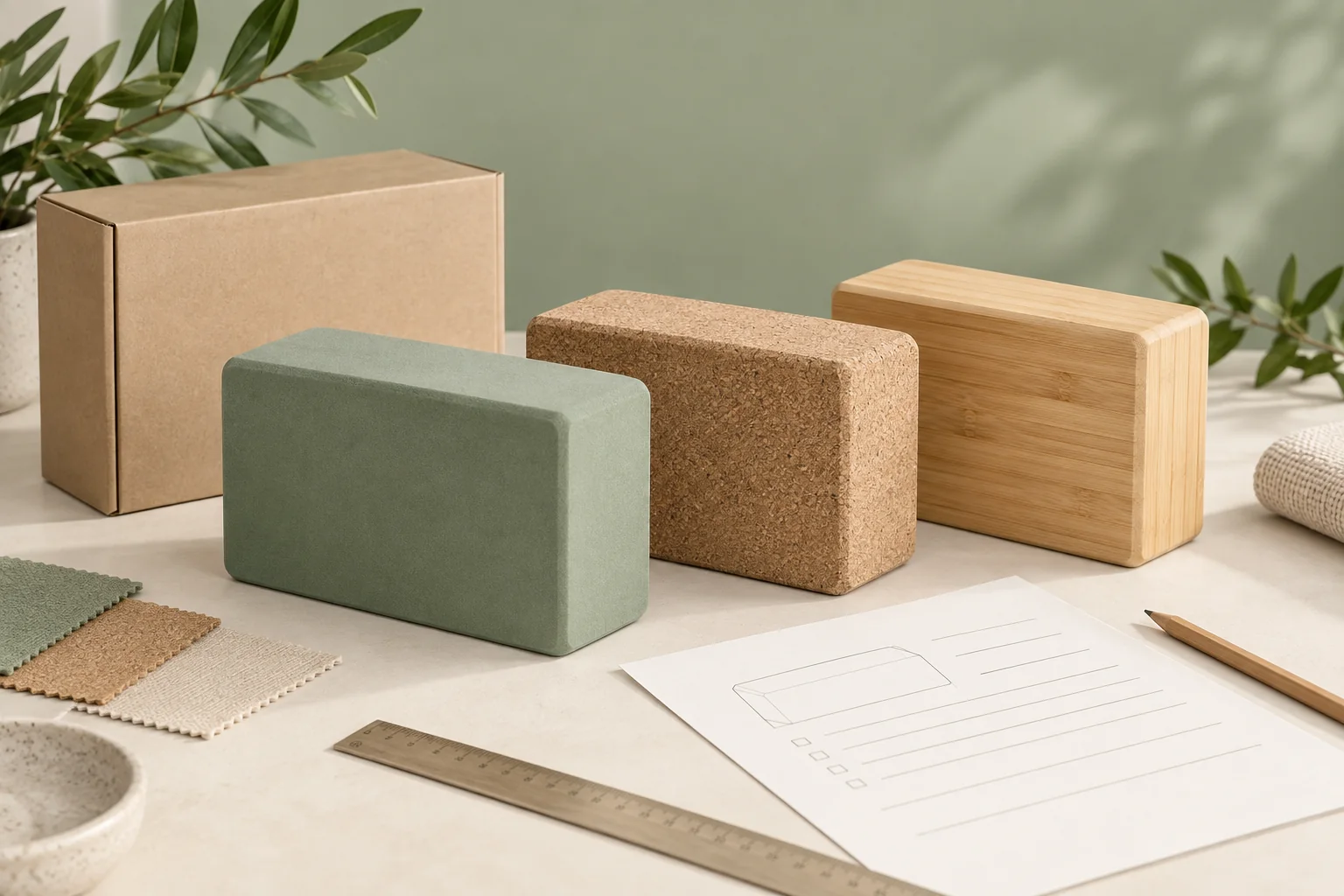
Review the AICO Yoga product range to identify relevant options. The catalog includes EVA, cork and bamboo yoga blocks, along with shaped block designs. Use the product name or model reference in your inquiry so the discussion begins with the correct item.
1. Specify the Material and Construction
Write down the material you want and ask the supplier to explain the construction of its proposed block. A material label alone does not describe every characteristic of the finished product. Request clarification about layers, surface treatments and any components that are relevant to your requirements.
If comparing EVA, cork and bamboo options, treat them as separate product proposals. Review physical samples rather than assuming that similar dimensions will produce the same handling experience. Ask the supplier to identify the exact sample reference it will use when quoting and manufacturing.
Avoid adding environmental claims to packaging simply because a material sounds natural. Request supporting information for the specific claim you intend to make, and keep the wording consistent with the evidence available for that product.
2. Define Dimensions, Shape and Edge Finish
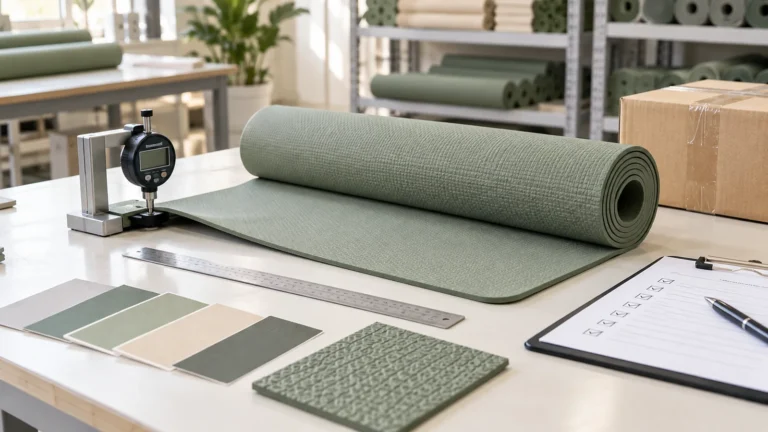
Specify length, width and height with units, and state the intended orientation of each dimension. Include a drawing or labeled reference photograph if the shape could be misunderstood. Agree on dimensional tolerances before evaluating whether a sample is acceptable.
Describe the corners and edges as well as the overall size. Rounded and beveled profiles can look different within a coordinated product range. For an oval, half or other shaped block, confirm which measurements will be used to check the finished item.
Review the block on each intended resting face for visible unevenness. Record observations with photographs and measurements. Keep these checks separate from any performance or load claims, which require their own appropriate evidence.
3. Turn Firmness and Weight Into Review Criteria
Terms such as “high density” or “extra firm” are difficult to compare without a reference. Ask which measurable characteristics the supplier uses and how they are checked. Density, finished weight and perceived firmness describe different aspects of a block; one should not automatically substitute for another.
Compare samples under consistent conditions and record the differences that matter to your product brief. If weight consistency is important for paired sets, specify the agreed range and the method for checking it. Keep a labeled reference sample for future orders.
Do not invent a load rating from a simple hand-pressure comparison. If your marketing needs a quantified performance claim, agree on the evaluation method and required supporting documentation before approving that wording.
4. Approve Surface Appearance and Color
Inspect the surfaces for the finish you want: texture, visible pores, grain pattern, marks and edge consistency. For materials with natural variation, ask what range of appearance should be expected. One unusually uniform sample may not represent the visual range of an entire order.
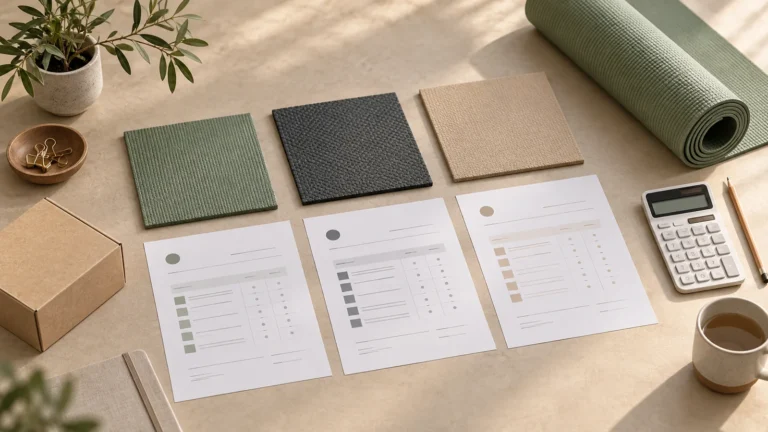
Evaluate colors in consistent lighting using a physical reference where possible. Photographs and screens can be useful for discussion, but they should not be the sole approval standard. Record which face or area is used for color comparison if the product has multiple finishes.
Ask for material-appropriate care guidance and review whether it fits the intended customer experience. If you plan to print cleaning instructions, confirm them with the supplier for the specific product rather than copying instructions from another material.
5. Confirm Branding on the Actual Block
Provide the logo artwork, its size and the preferred placement. Specify whether branding appears on one face, multiple faces or the packaging only. Include the orientation of the logo so that the finished block looks correct when displayed or packed.
Ask which branding methods are suitable for the proposed material and finish. Review a physical branded sample for clarity, contrast, edge definition and placement. A digital mockup helps explain the design but does not establish how the finished surface will look.
Discuss artwork preparation and setup charges as part of the OEM and ODM customization process. Keep the approved artwork revision with the sample record to reduce confusion on repeat orders.
6. Specify the Saleable Unit and Packaging
Make the quantity unit explicit. A request for “500 blocks” and a request for “500 pairs” describe different orders. State how many blocks belong in each retail package and whether accessories, instructions or other items are included.
Define the packaging format, label placement and any channel-specific preparation. For a coordinated kit, check that the blocks fit alongside the other products without unwanted movement or pressure marks. Review the complete packed sample rather than approving each component in isolation.
Request carton quantities, packed dimensions and gross weight when arranging transport estimates. Keep preliminary estimates marked as provisional until the packaging configuration is confirmed. Record any packaging changes in the same specification revision as the product.
7. Agree on Inspection and Reorder References
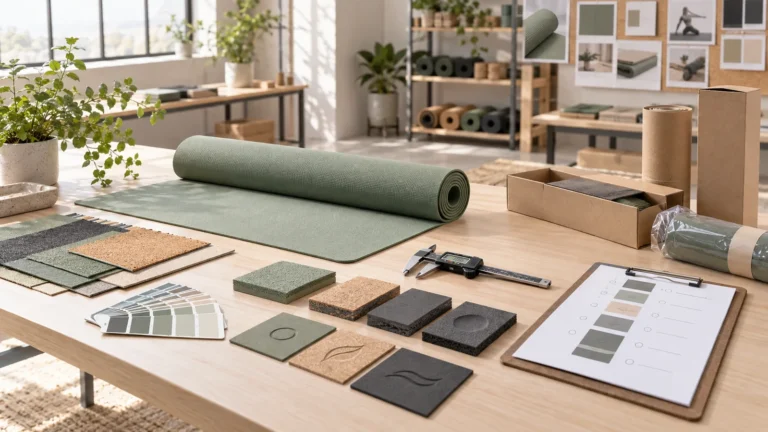
Before production, identify the approved sample, written specification and artwork that will govern inspection. Ask which characteristics the supplier checks and what records can be provided. Dimensions, appearance, branding and package contents should refer to clearly agreed expectations.
Discuss how differences will be recorded and resolved. Photographs, measurements and a description of the affected variant are more useful than a general comment that the blocks look wrong. The manufacturing page provides a starting point for discussing how your requirements fit into production and inspection.
For reorders, confirm that the same construction, color reference, artwork and packaging remain available. Ask the supplier to flag proposed changes before making them. Keep earlier approvals accessible so a reorder does not become an undocumented new product.
Your Custom Yoga Blocks Inquiry Checklist
- Product model, material and construction preference.
- Dimensions, shape, edge profile and agreed tolerances.
- Sample reference for finish, firmness and weight expectations.
- Color reference and acceptable appearance variation.
- Logo artwork, position, size and branding scope.
- Quantity by variant, with pieces and pairs clearly distinguished.
- Retail packaging, carton configuration and delivery destination.
If a requirement is still undecided, label it as an open question. Ask for alternatives on separate quotation lines so you can compare them without mixing different specifications.
Frequently Asked Questions
Should I choose EVA or cork yoga blocks for my brand?
Compare samples against your collection brief, including handling, appearance, branding and packaging. There is no single material choice that suits every brand or product range.
Can I approve the logo from a digital mockup?
Use the mockup to confirm layout, then review a physical branded sample to assess the result on the actual material and finish.
Are two blocks always supplied as a pair?
No. Specify the number of pieces in each saleable unit and confirm that both the quotation and packaging plan use the same definition.
What should I keep for a repeat order?
Keep the approved sample, specification revision, color reference, artwork file and packaging details, together with any agreed changes from the previous order.
Build a Clear Product Brief Before Ordering
Well-specified custom yoga blocks are easier to quote, review and reorder. Start with the material and shape, make appearance and branding expectations visible, and confirm what belongs in the final package.
Contact AICO Yoga to discuss your private label yoga blocks. Share your preferred model, quantity, logo and packaging requirements, plus any questions you want to resolve during sampling.