Custom Yoga Straps: 7 Specifications for Private Label Buyers
Custom yoga straps look simple, but small specification gaps can change how the finished product feels, functions and presents your brand. A request for “cotton straps with our logo” still leaves the supplier to interpret the webbing, width, length, buckle, stitching, color, branding and package.
Private label buyers can prevent avoidable sample revisions by recording these decisions before requesting a final quotation. The following seven specifications create a practical purchasing brief for yoga brands, retailers, studios and promotional programs. Available options vary by construction, so confirm each point with the supplier and approve a physical sample before production.
1. Choose the Webbing Material and Construction
Start with the strap body. Cotton webbing is widely used for its familiar hand feel and natural appearance. Polyester webbing can provide a different surface, color result and performance profile. Blended or recycled-material options may also be available, depending on the product and sourcing requirements.
Do not select material from a short label alone. Ask for the fiber composition, weave, weight or thickness reference, surface finish and available supporting documentation. Two cotton straps can feel very different if their yarn, density or weave changes. A looser construction may feel softer but can also behave differently around the buckle and under load.
If your packaging will carry claims such as organic, recycled, low-impact or certified material, request evidence for the exact material and production batch before approving the wording. Keep the approved webbing swatch with the final specification so repeat orders can be compared against the same reference.
2. Specify Width, Length and Thickness
Write every dimension with units and explain how it is measured. Common yoga strap projects use different lengths for general stretching, taller users, studio practice or specific market preferences. The best choice depends on the intended user and how the strap will be demonstrated or packaged.
Width affects grip, comfort, buckle compatibility and the space available for a logo. Thickness and weave density influence how easily the strap passes through the buckle and how bulky it becomes when rolled. These dimensions should therefore be reviewed as one system rather than separate cosmetic choices.
Ask the supplier to state the finished length, finished width, relevant thickness reference and normal production tolerance. Confirm whether the length includes the buckle section and folded end. A labeled drawing removes ambiguity and gives inspection teams a clear measurement method.
3. Select the Buckle Type and Finish
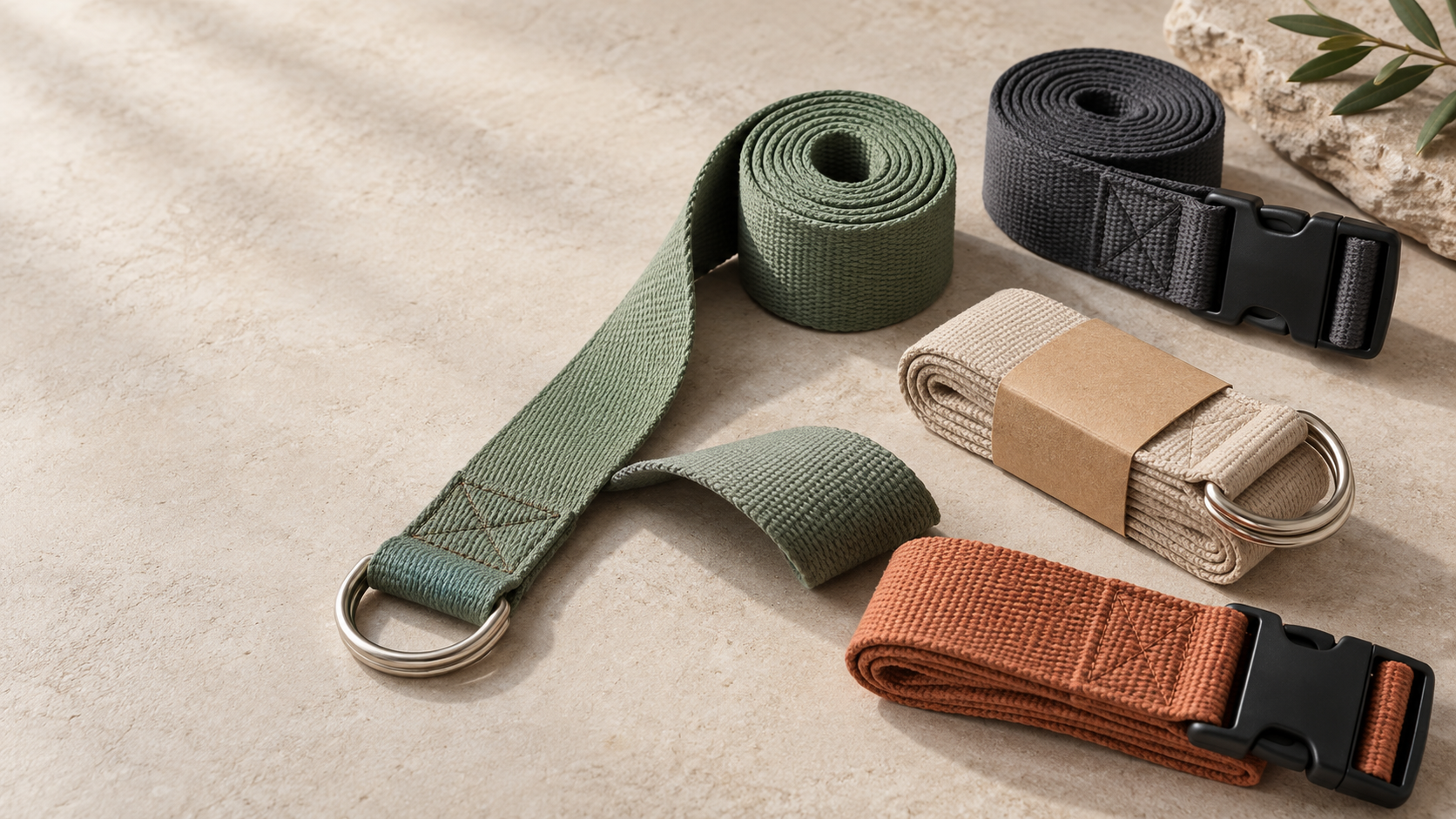
The buckle changes both the user experience and the visual character of the product. Metal D-rings offer a classic yoga strap format and allow the loop to be adjusted by threading the webbing through two rings. Rectangular metal buckles, sliding buckles and quick-release plastic buckles create different adjustment methods and price points.
For metal hardware, define the shape, dimensions, material description, surface finish and color. Check edges and contact points for smoothness, and review whether the finish marks the webbing during repeated adjustment. If plating color matters, approve a physical reference because photographs can make metallic finishes appear lighter or warmer than they are.
For plastic hardware, confirm the material, opening method, color and fit with the selected webbing. Test the actual buckle-webbing combination. Hardware that works with one width or thickness may slide poorly or hold inconsistently when the webbing changes.
4. Define Stitching and End Construction
Record how the buckle end and free end are finished. The buckle section may use a folded webbing end with one or more stitch patterns. The opposite end may be heat cut, folded and sewn, or finished by another suitable method according to the material.
Specify thread color, visible stitch pattern and the expected appearance on both sides. Buyers should inspect straightness, skipped stitches, loose threads, uneven folds and sharp or rough edges. If the stitching is intended to blend into the strap, approve the thread match under normal lighting. If it is a design detail, provide an exact contrast-color reference.
Ask how construction strength will be checked for the approved design. Any change to webbing, hardware, fold length or stitch pattern should trigger a new review, because these parts work together.
5. Approve Color and Logo Application
Provide a physical color reference or an agreed color standard when brand consistency matters. The same requested color can look different on cotton and polyester, and dye results may vary with yarn and weave. Review the sample in daylight and keep the approved swatch for production comparison.
Logo options may include screen printing, heat transfer, woven labels, sewn patches or custom webbing, depending on the construction and order requirements. Supply vector artwork and define the logo size, color, orientation, distance from the buckle and repeat pattern where relevant.
A digital mockup is useful for placement, but approval should include a branded physical sample. Bend, roll and thread the strap during review to see whether the mark cracks, distorts, rubs against the buckle or disappears inside the rolled package. The AICO Yoga OEM and ODM solutions page outlines the broader customization process for private label projects.
6. Plan the Retail Packaging and Label Content
Decide how the strap will be presented before finalizing the logo position. Common formats include a paper belly band, hangtag, kraft box, pouch or simple label. The package must hold the strap neatly without hiding essential branding or allowing the product to unwind during handling.
List every component in the saleable unit: strap, band or tie, insert, barcode label, care information and retail package. Provide final artwork with dimensions, materials, print colors and placement. Confirm the language, country-specific information and claims needed for the target market with your own compliance adviser.
Review one fully assembled packaging sample. Check barcode readability, package closure, product orientation and the amount of pressure placed on printed areas or hardware. After approval, request packed unit dimensions, unit weight and carton details for freight and warehouse planning.
7. Agree on Quality Checks Before Production
A useful inspection plan connects every important requirement to a check. For custom yoga straps, this may cover webbing material and appearance, finished dimensions, buckle type and finish, stitching, adjustment, color, logo, package contents and carton quantities.
Define the approved sample and specification revision that production will follow. Discuss how the supplier checks hardware attachment and the completed strap for the intended use. Avoid relying on a generic statement such as “quality must be good”; specify what inspectors will observe or measure and how results will be recorded.
Keep the approved strap, webbing swatch, hardware reference, artwork and packaging sample for reorders. Ask the supplier to report proposed changes before substituting material, buckle, thread, printing method or package components. The manufacturing overview can help buyers prepare questions about production and inspection.
Custom Yoga Strap Inquiry Checklist
- Webbing material, composition, weave and surface preference.
- Finished length, width, thickness reference and tolerances.
- Buckle type, size, material, finish and color.
- Fold, stitch pattern, thread color and free-end finish.
- Strap color reference and acceptable appearance range.
- Logo method, artwork, size, position and orientation.
- Retail package, labels, inserts and barcode requirements.
- Approved sample, inspection points and reorder references.
Also state the target order quantity, delivery destination and desired timing. Mark undecided items as questions so suppliers can separate alternatives in the quotation. When comparing offers, check that each price is based on the same material, size, hardware, branding and packaging scope.
Frequently Asked Questions
What information is needed for a custom yoga strap quotation?
Provide the material, length, width, buckle, color, quantity, logo method, packaging and delivery destination. Reference images can clarify the style, but written dimensions and requirements are still needed.
Are D-ring and quick-release yoga straps interchangeable?
No. They use different adjustment methods, hardware and often different webbing or stitching details. Select the buckle around the intended user experience and approve the complete construction.
Can the same logo method be used on every strap material?
Not always. Print adhesion, detail, color and flexibility vary by webbing surface and composition. Test the proposed method on the actual production material.
What should buyers retain for repeat orders?
Keep the approved finished sample, dimension sheet, webbing and hardware references, color standard, logo artwork, packaging files and inspection requirements.
Build a Clear Private Label Yoga Strap Brief
A complete specification allows buyers and suppliers to compare the same product, shorten sampling discussions and create useful inspection references. Define the strap body and buckle first, then approve branding and packaging on the finished construction.
Explore the AICO Yoga product range or contact AICO Yoga about custom yoga straps. Share your target material, dimensions, buckle, quantity, logo and packaging so the project can be reviewed around one clear brief.