
Custom Yoga Mat Quotation: 9 Checks Before Ordering
A custom yoga mat quotation is useful only when you understand exactly what it includes. Two suppliers may offer different prices because they have priced different materials, quantities, printing coverage or delivery arrangements. Before choosing a manufacturer, make the offers comparable.
This nine-point checklist helps private label brands, retailers and studio buyers review a quotation before placing an order. Start with one written product brief, send the same version to each supplier, and ask them to identify every assumption or exclusion. A blank field should mean unresolved, not automatically included.
What Should a Custom Yoga Mat Quotation Include?
At minimum, request the product specification, quantity by variant, branding scope, packaging, one-time charges, inspection arrangements, delivery basis, payment milestones and validity date. Record each offer in the same currency and use the same destination and order configuration. Keep supplier alternatives separate from your requested specification.
1. Match the Material and Construction
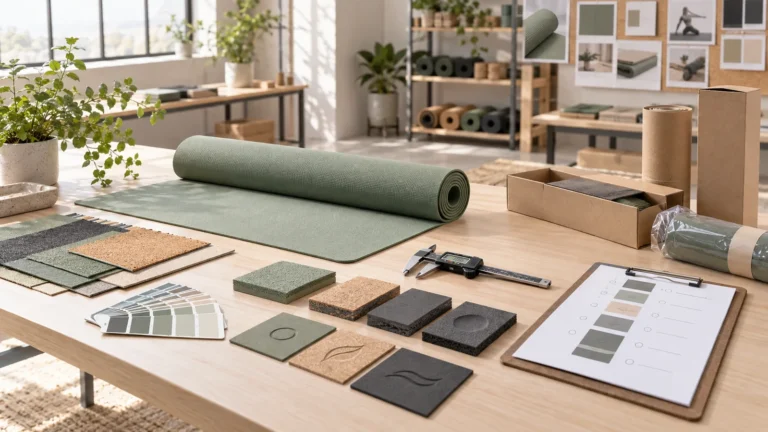
A description such as “premium yoga mat” does not provide enough information for comparison. Ask for the surface material, base material, layer construction, texture and relevant material grade or reference. If you have approved a sample, include its reference number in the quotation request.
Do not compare a single-layer mat with a laminated mat as though they were identical. Where suppliers suggest alternatives, request a separate line for each construction and an explanation of the difference. Browse the AICO Yoga product range to identify the product category before preparing your brief.
2. Confirm Dimensions and Measurement Conditions
Specify length, width, thickness, shape and any agreed weight requirement. Ask the supplier to state the tolerances used in its offer. Thickness measurements can depend on how a soft material is compressed, so the measurement method should be clear enough to repeat during inspection.
Check whether the quoted size is the finished product size or a nominal description. Also confirm corner shape, edge finishing and alignment marks where relevant. These details help prevent a price comparison from hiding differences in the product you will actually receive.
3. Separate Total Quantity From Quantity per Variant
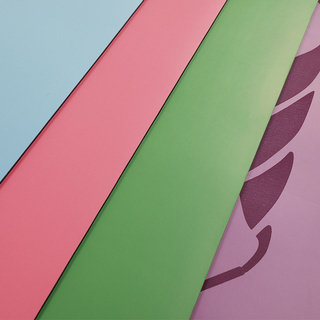
An order of several colors is not necessarily priced like one color at the same total quantity. List units for each color, size and artwork version. Ask the supplier to confirm the minimum quantity for each variant rather than relying on a single minimum order figure.
Request price breaks only for quantities you could realistically order. Keep the first-order configuration fixed while comparing suppliers, then assess larger reorder scenarios separately. Confirm how a change in the color split would affect the quotation before using it in your purchasing budget.
4. Define the Complete Branding Scope
“Logo included” can leave important questions unanswered. Specify the application method, number of colors, dimensions, position and whether branding appears on one or both sides. Provide the same artwork file and revision to every supplier.
Ask whether artwork preparation, print setup and physical approval samples are separate charges. Clarify the cost of a later artwork revision and whether setup charges recur on repeat orders. The OEM and ODM solutions page provides context for discussing customization as a complete project rather than an isolated logo request.
5. Itemize Packaging and Accessories
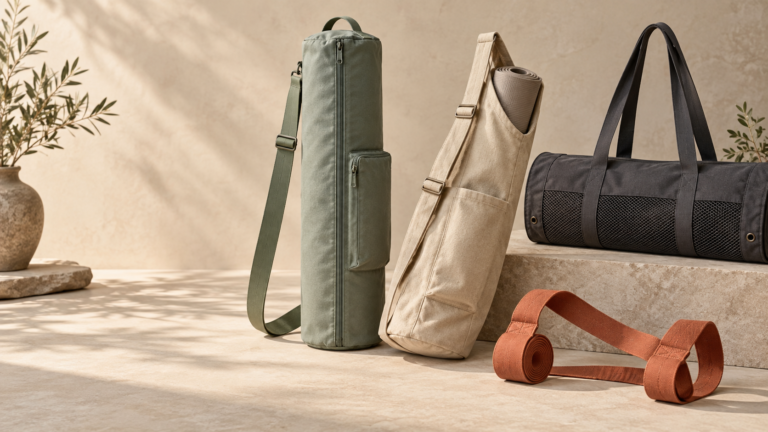
Write down what one saleable unit contains: the mat, strap, paper band, carry bag, instructions, labels or retail box. Then identify the master-carton packing arrangement. An offer for a bare mat should not be ranked directly against an offer for a complete retail package.
Ask for estimated packed dimensions, gross weight and units per carton if transport quotations depend on them. Mark estimates as provisional until packaging is finalized. If you need channel-specific labels or preparation, describe those tasks and request an explicit included or excluded response.
6. Identify One-Time Charges and Approval Milestones
Separate recurring unit costs from sample development, tooling, artwork setup and other project charges. Ask what each fee covers, when it becomes payable and whether it changes if the specification changes. Do not assume that sample charges will be credited against an order.
Request a timeline that identifies its starting conditions: specification confirmation, artwork approval, sample approval or receipt of payment. Record production readiness and transportation separately. A proposed dispatch date and a proposed arrival date describe different milestones and should not occupy the same comparison field.
7. Make Quality Requirements Part of the Offer
Ask what inspection activity is included, which approved reference will be used and what records will be provided. If your brand requires independent testing or third-party inspection, request a separate scope and cost allocation. Avoid treating a general statement about quality as a defined inspection plan.
Confirm how the supplier will handle a documented difference from the agreed specification. Include the notification process and proposed corrective-action procedure in your purchasing discussion. Review the manufacturing page alongside your quotation checklist so production and inspection expectations stay connected.
8. Compare the Same Delivery Basis
Ask each supplier to state the delivery rule, named place or port, and applicable version when using Incoterms. The International Chamber of Commerce explains that Incoterms rules allocate delivery responsibilities, costs and risks. A three-letter term without a clear location is an incomplete basis for comparison.
List freight, insurance, destination handling and other expected charges separately, marking who provides each estimate. Ask a freight professional to clarify any uncertainty before finalizing the comparison. Avoid adding a charge twice when it is already included in the supplier’s delivery price.
9. Record Validity, Payment Milestones and Exclusions
Every quotation should have a date, version and validity period. Ask what could trigger a price revision, including specification changes or a different shipping arrangement. Keep the accepted version with your final product brief so later discussions refer to the same documents.
Record payment milestones and the documents or approvals associated with them. Ask the supplier to list exclusions explicitly. Resolve phrases such as “standard packing,” “usual tolerance” or “shipping extra” before deciding that an offer meets your requirements.
A Simple Way to Organize Your Comparison
Use one row for each checklist item and one column for each supplier. Record whether the answer matches your brief, differs from it or remains unconfirmed. Include a short question next to every unresolved item instead of filling the gap with an assumption.
- Product match: Is the quoted construction and variant mix the same?
- Cost scope: Which recurring and one-time charges are included?
- Evidence: Which sample, artwork and inspection reference support the offer?
- Open items: What must be clarified before approval?
For your internal comparison, calculate the product subtotal and add confirmed charges that are not already included. Keep uncertain delivery costs in a separate estimate section. This makes the comparison transparent without presenting provisional numbers as a fixed final cost.
Frequently Asked Questions
Can I request a quote before selecting the material?
Yes, but ask for clearly labeled alternatives. A preliminary quotation helps narrow options; a final comparison requires an agreed construction and specification.
Should the lowest unit price decide the order?
Compare product suitability, included services, one-time costs and unresolved requirements alongside price. A lower price can be valid, but it must describe a product and scope that meet your brief.
Should sampling and bulk production appear separately?
Yes. Separate the sample scope, approval process and charges from the production offer, and ask which details may change after sample approval.
What if a supplier leaves a quotation field blank?
Ask for written clarification. Do not assume that a missing charge is included or that an unspecified feature matches your requirements.
Prepare Your Next Quotation Request
A clear custom yoga mat quotation starts with a consistent brief and ends with documented answers. Match the product first, compare the complete scope second, and resolve open items before confirming your order.
Preparing a private label collection? Contact AICO Yoga for a quotation with your preferred material, dimensions, quantity by variant, artwork, packaging needs and delivery destination. Include the requirements you still need help defining.