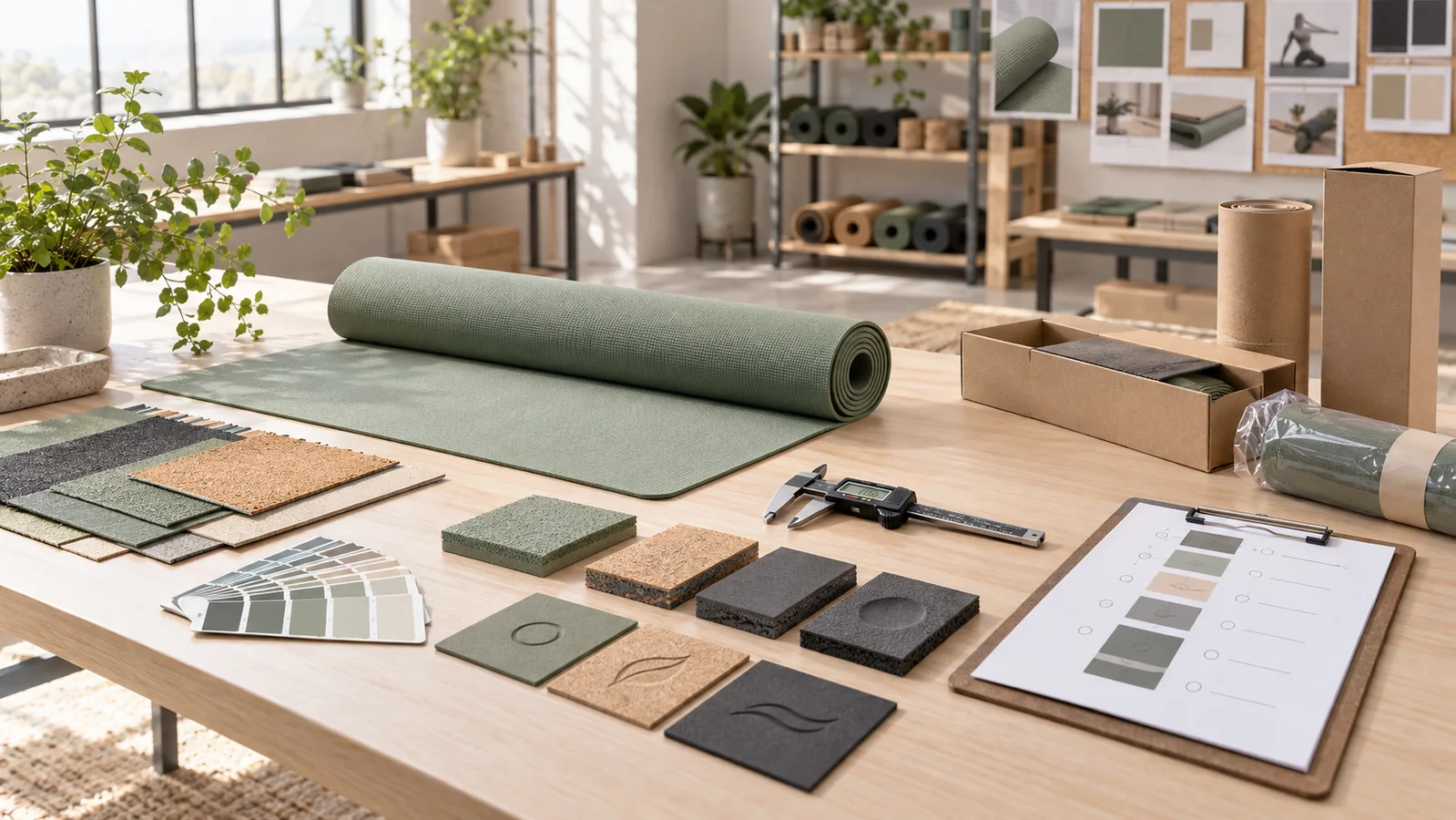
8 Steps in the OEM Yoga Mat Sampling Process
A clear OEM yoga mat sampling process turns an idea into an approvable product specification before bulk production begins. For private label brands, distributors, retailers, and studio groups, the sample is more than a sales demonstration. It is the physical reference used to confirm materials, dimensions, color, branding, packaging, and acceptable workmanship.
Problems often begin when buyers approve a sample informally or leave important details in separate emails and chat messages. The eight steps below create a practical approval path that both the buyer and manufacturer can follow. The exact number of sample rounds depends on the product and customization scope, but the control points remain useful for most custom yoga mat projects.
1. Start the OEM Yoga Mat Sampling Process with a Complete Brief
Before asking for a sample, prepare a short written brief. It should explain the intended customer, sales channel, target positioning, destination market, estimated order quantity, and required launch window. Product details should include the preferred mat type, material, size, thickness, color, surface, logo method, artwork coverage, accessories, and packaging.
A reference photo can communicate visual direction, but it cannot replace a specification. Two mats that look similar online may differ in density, weight, grip, surface feel, layer construction, printing method, and odor. Mark uncertain decisions clearly so the supplier can recommend options rather than quietly making assumptions.
Buyers who are still selecting a construction can review AICO Yoga’s Yoga and Pilates product range before preparing the brief.
2. Choose the Right Type of Sample
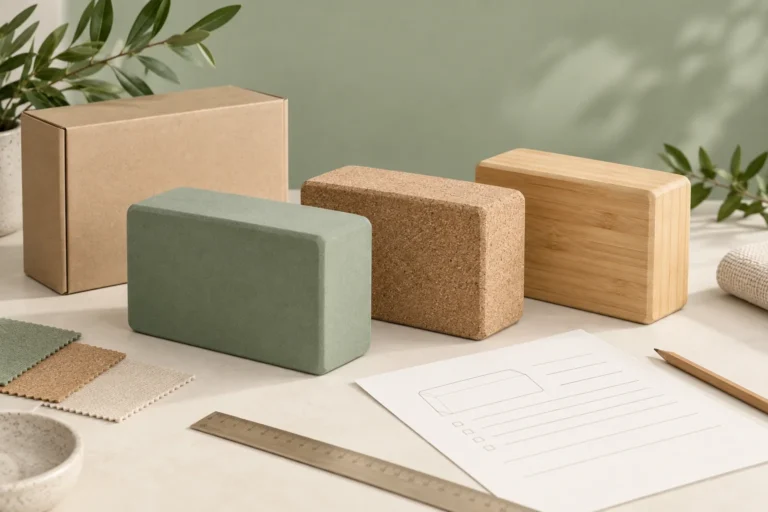
Not every project needs the same first sample. A stock reference sample helps you evaluate an existing material, texture, thickness, and basic construction. A customized sample adds your selected color, logo, or print. A pre-production sample represents the final approved specification intended for bulk production.
Ask what each sample will and will not confirm. For example, a material swatch may help compare color and texture but cannot show the finished mat’s weight, cushioning, roll behavior, or edge quality. A digital artwork proof can confirm placement and scale but does not prove how ink, engraving, or heat transfer will look on the physical surface.
Choose the sample that resolves the most important uncertainty first. This prevents paying for a fully branded sample before the basic material and construction are accepted.
3. Lock the Material and Construction
Confirm the material name and construction in writing. Depending on the product, the mat may use one material or multiple layers. Record the surface material, base material, bonding method, texture, density or weight reference when relevant, color reference, and any functional requirements that can be evaluated.
Review the physical sample under conditions that match its intended use. Consider surface feel, dry grip, wet-condition expectations, cushioning, stability, resilience, roll memory, odor, weight, and ease of cleaning. Avoid unsupported performance claims. If your market requires a particular test or compliance document, identify the exact product, test method, destination, and claim before relying on a generic certificate.
4. Approve Dimensions, Thickness, and Tolerances
Write the finished length, width, and thickness in a single unit system and state which dimensions are critical. A nominal specification alone is not enough for production control. Ask the manufacturer what tolerance is practical for the selected material and process, then record the accepted range.
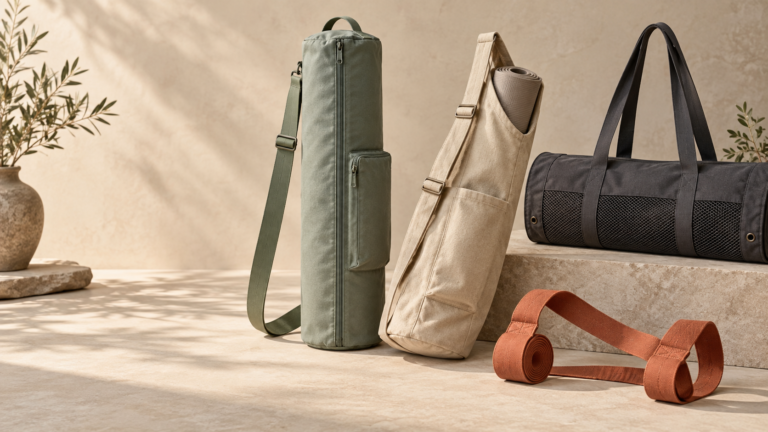
Measure the sample at agreed locations and allow it to rest normally before assessment if rolling or packaging affects its shape. Also review corner radius, edge cut, alignment marks, printed borders, and layer registration. For accessories included with the mat, confirm strap dimensions, bag fit, closures, labels, and the complete packed set.
5. Approve Color, Artwork, and Logo Application
Supply artwork in the format requested by the manufacturer and identify the correct version. Confirm logo dimensions, position, orientation, color, print coverage, and the intended application method. The same artwork can appear different when screen printed, heat transferred, digitally printed, embossed, or engraved.
Use a recognized color reference when accurate color matching matters, but still approve the result on the actual material. Surface color and texture can change how printed colors appear. Review small text, fine lines, gradients, registration, edges, and contrast. If the sample requires revision, annotate a photo and issue a new artwork version instead of describing the change only in a chat message.
For a more detailed comparison, see the guide to custom yoga mat logo printing methods.
6. Test the Packaging as Part of the Product
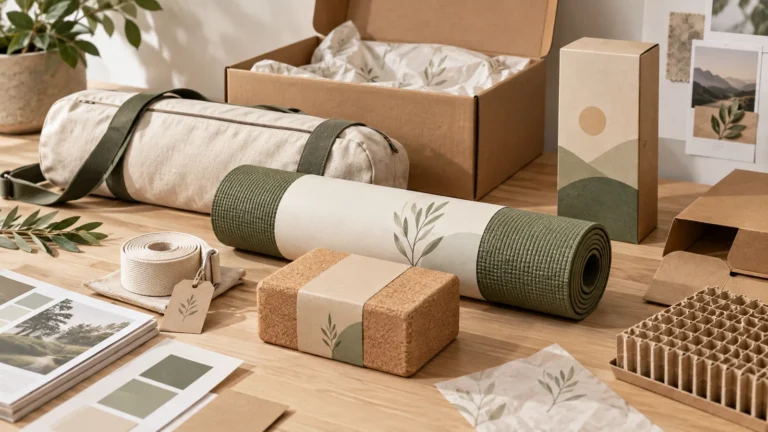
Packaging should be sampled with the mat whenever it affects presentation, protection, shipping size, labeling, or customer assembly. Confirm whether the mat uses a paper sleeve, belly band, carton, carry strap, bag, tissue, insert, barcode label, warning label, or instruction card.
Review the fit around the rolled mat, artwork position, opening experience, material strength, closure method, and protection during handling. Check the individual package inside the master carton and confirm carton quantity, orientation, dividers, shipping marks, and any pallet requirements. A beautiful retail package that crushes easily or wastes carton space can create avoidable logistics problems.
7. Inspect the Physical Sample with a Written Checklist
Inspect the sample systematically instead of relying on a general impression. Compare it with the latest specification and artwork proof. Record the result for material, dimensions, thickness, color, surface, grip expectations, logo, print, edge finishing, layer bonding, odor, accessories, labels, and packaging.
Photograph important details in consistent lighting and include a scale reference where size matters. Classify findings as accepted, revision required, or open for discussion. If several people review the sample, combine their feedback into one controlled document so the supplier does not receive conflicting instructions.
A defined sampling checklist also supports later production inspection. AICO Yoga’s manufacturing and quality-control overview explains how approved requirements connect with production.
8. Create a Final Approval Record Before Bulk Production
Final approval should identify the exact physical sample, specification version, artwork version, packaging version, approved changes, and unresolved commercial conditions. Ask both sides to confirm the same record in writing. Store clear photos and, where practical, keep an approved reference sample.
Do not approve only the appearance if the order depends on other requirements. Confirm the included accessories, labels, packing method, carton details, inspection plan, quantity, and agreed commercial terms. Any change after approval should receive a new revision number and a clear explanation of its effect on the sample, price, production plan, or order quantity.
OEM Yoga Mat Sample Approval Checklist
- Buyer brief and intended market confirmed
- Sample type and limitations understood
- Material and layer construction recorded
- Length, width, thickness, and tolerances approved
- Color reference and physical color result approved
- Artwork version, scale, position, and application method approved
- Surface, edges, bonding, roll behavior, and workmanship reviewed
- Accessories, labels, and packaging contents confirmed
- Individual package and master carton plan reviewed
- Final approval record shared with the manufacturer
Frequently Asked Questions
What information should I send before requesting an OEM yoga mat sample?
Send the mat type, material preference, dimensions, thickness, color, artwork, logo method, packaging, expected order quantity, destination country, sales channel, and target schedule. Identify which details are confirmed and which require recommendations.
Is a stock sample enough for a private label order?
A stock sample can confirm an existing material and basic construction. It normally cannot confirm your final color, branding, artwork, labels, or packaging. Use it as an early decision tool, then approve a customized or pre-production sample when those details are important.
How should sample revisions be communicated?
Use one consolidated revision document with annotated photos, exact measurements, updated artwork files, and a version number. State which details are accepted and which must change. Ask the supplier to confirm the revision before producing the next sample.
When is an OEM yoga mat sample ready for approval?
It is ready when the buyer can compare it with a complete written specification and all important materials, dimensions, branding, accessories, labels, and packaging are either approved or formally documented as exceptions.
Use Sampling to Create a Reliable Production Reference
An effective OEM yoga mat sampling process reduces ambiguity before bulk production. The goal is not to create endless samples; it is to resolve the right questions in the right order and finish with one controlled reference that purchasing, production, and quality teams can use.
If you are preparing a custom yoga mat project, contact AICO Yoga for an OEM or private label consultation. Share your target product, market, quantity, branding, packaging, and delivery destination so the sampling requirements can be reviewed clearly.