
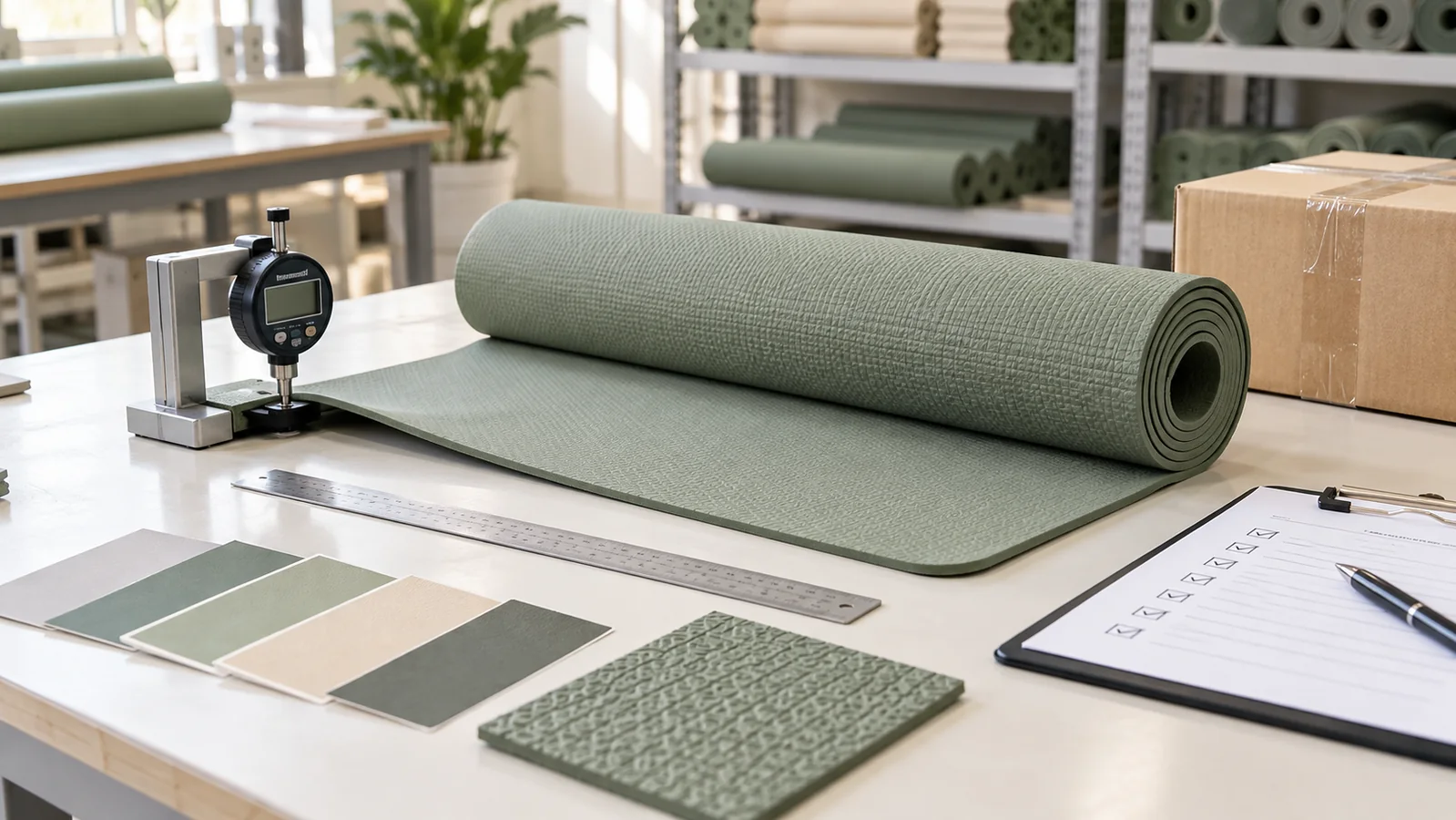
7 Yoga Mat Quality Control Checks Before Shipment
A custom yoga mat may look simple, but buyers need to evaluate more than color and logo placement. Material consistency, dimensions, surface condition, printing, odor, packaging and order-level consistency can all affect the finished product and the customer experience.
A clear yoga mat quality control plan helps a brand and its manufacturer work from the same expectations. It does not replace product testing or market-specific compliance advice, but it gives procurement teams a practical structure for sample approval and pre-shipment inspection. Here are seven checks to define before your custom yoga mats leave the factory.
Quick Quality Control Checklist
- Compare the product with the approved reference sample.
- Verify material, dimensions and weight using agreed tolerances.
- Inspect the surface, edges and bonding.
- Check grip and cushioning with an agreed method.
- Review logo position, color and print quality.
- Assess odor, cleanliness and packaging condition.
- Record results across a representative order sample.
1. Compare Production Mats With the Approved Sample
The approved sample should be the starting point for inspection. It records the agreed material, color, texture, dimensions, logo treatment and packaging. Without a clear reference, the brand and supplier may judge the same product differently.
Label the approved sample and keep photographs, measurements and written specifications with it. If the sample was changed after approval, update the reference rather than relying on email memory. During inspection, compare production units with this final version under similar lighting and handling conditions.
A good specification should also identify which differences are acceptable. Manufacturing processes naturally involve variation, so buyers should agree on measurable tolerances and clear defect definitions before production. The AICO Yoga OEM and ODM solutions page outlines the broader customization process that should lead to this approval stage.
2. Verify Material, Dimensions and Weight
Check that the production mat matches the approved material construction. Depending on the product, this may involve confirming the surface layer, base material, density, texture or laminated structure. Do not rely only on the product name; the written specification should describe the actual construction being ordered.
Measure length, width and thickness using an agreed method. A soft mat can compress under a measuring tool, so both sides should understand how thickness will be measured. Weight can provide another useful consistency check, although it should be interpreted together with dimensions and material.
Record the results rather than describing them as simply “good” or “bad.” If measurements fall outside the agreed tolerance, identify how many units are affected and discuss whether the issue is isolated or systematic.
3. Inspect Surface, Edges and Bonding
Unroll each selected mat on a clean, flat surface. Look for scratches, stains, bubbles, creases, uneven texture, color patches or visible contamination. Inspect both sides because a defect on the base may affect appearance, grip or stability even when the top surface looks acceptable.
Edges should be checked for clean cutting, consistent shape and damage. For layered mats, review the bond around the perimeter and across the surface. Lifting, gaps or obvious separation should be documented with close-up photographs.
Some temporary curling may come from rolled packaging, but the expected recovery condition and evaluation time should be agreed in advance. Buyers can compare different product constructions on the yoga mats section before defining material-specific checks.
4. Evaluate Grip, Cushioning and Flatness
Performance checks should be repeatable. Instead of an inspector giving a general opinion, define the condition, surface side and simple method used for comparison. A production unit can be compared with the approved sample for dry-hand grip, base stability and cushioning feel.
Place the mat on the intended type of clean floor and check whether it lies flat. Examine corners and edges for excessive lifting. Apply consistent hand pressure to several areas to identify obvious differences in firmness or rebound.
These practical comparisons are useful for production consistency, but they are not substitutes for laboratory testing when a brand requires verified performance claims. If the packaging or marketing makes a specific claim, the brand should determine what evidence is required for the destination market.
5. Check Logo, Artwork and Color
Custom branding needs its own inspection criteria. Confirm the logo’s location, size, orientation and distance from the edges against the approved artwork or placement drawing. Look for blurred lines, incomplete areas, smudging, peeling, distortion or unwanted marks around the print.
Color should be assessed under controlled lighting and compared with the approved physical reference whenever possible. Screens are not reliable color standards. The mat material and surface texture may also change how a printed color appears, which is why sample approval matters.
For alignment graphics or larger printed areas, check several positions across the design rather than only the logo. Photograph acceptable and unacceptable examples so later decisions remain consistent.
6. Review Odor, Cleanliness and Packaging
Open selected packages and note any unusual or inconsistent odor. Materials and packaging can have a normal initial smell, so the buyer and manufacturer should agree on the evaluation conditions rather than using vague expectations. Strong, unexpected or contaminated odors should be investigated before shipment.
Check that mats are clean, dry and free from dust, oil, loose particles or packaging residue. Confirm that labels, straps, paper bands, bags or boxes match the approved packaging specification. Barcodes and required product information should be readable and correctly positioned.
Inspect the master cartons as well as the retail package. Verify carton markings, unit quantity, product orientation and protection. Packaging should help the mat arrive in the same condition in which it passed inspection. See the AICO Yoga manufacturing process for the relationship between inspection, packaging and shipment.
7. Inspect a Representative Sample and Document Results
Checking one perfect unit does not describe an entire order. The inspection plan should define how units are selected across cartons, colors, sizes or production batches. The appropriate sampling approach depends on order size, product risk and the buyer’s requirements.
Use a consistent checklist and separate critical, major and minor issues according to definitions agreed before production. Record measurements, quantities and photographs. If a problem appears, identify the affected cartons or variants and agree on corrective action before shipment.
The final report should state what was inspected, what reference was used, the results and any unresolved exceptions. Keep the report with the approved sample and order documents. This creates a useful history for repeat orders and product improvements.
Questions to Ask Your Yoga Mat Manufacturer
- Which approved sample and specification will be used for inspection?
- What dimension, weight and color tolerances can be agreed?
- How are layered mats checked for bonding issues?
- How will different colors or product variants be sampled?
- What photographs and measurement records appear in the report?
- What happens if production does not match the approved standard?
Frequently Asked Questions
When should yoga mat quality requirements be confirmed?
Confirm them before mass production, ideally during sample development. The final approved sample, specification, tolerances and defect definitions should all agree.
Is visual inspection enough for a custom yoga mat?
No. Visual checks are important, but buyers should also verify dimensions, construction, weight, branding, packaging and agreed performance comparisons. Laboratory testing may be needed for specific claims or compliance requirements.
Should every unit be inspected?
The inspection level depends on order size, risk and buyer requirements. A documented sampling plan can provide a structured view of order consistency, while some high-risk characteristics may require additional checking.
What should be included in a pre-shipment report?
Include the order reference, inspected quantity, selection method, approved standard, measurements, defect findings, photographs, packaging checks and final disposition.
Build Quality Control Into Product Development
Effective yoga mat quality control begins before the final inspection. Brands get clearer results when the product specification, approved sample, tolerances, packaging and reporting method are agreed early. The goal is not only to find defects; it is to reduce ambiguity and help every party evaluate the order using the same standard.
Developing a private-label yoga mat collection? Contact AICO Yoga to discuss product specifications, customization and inspection requirements for your project.